
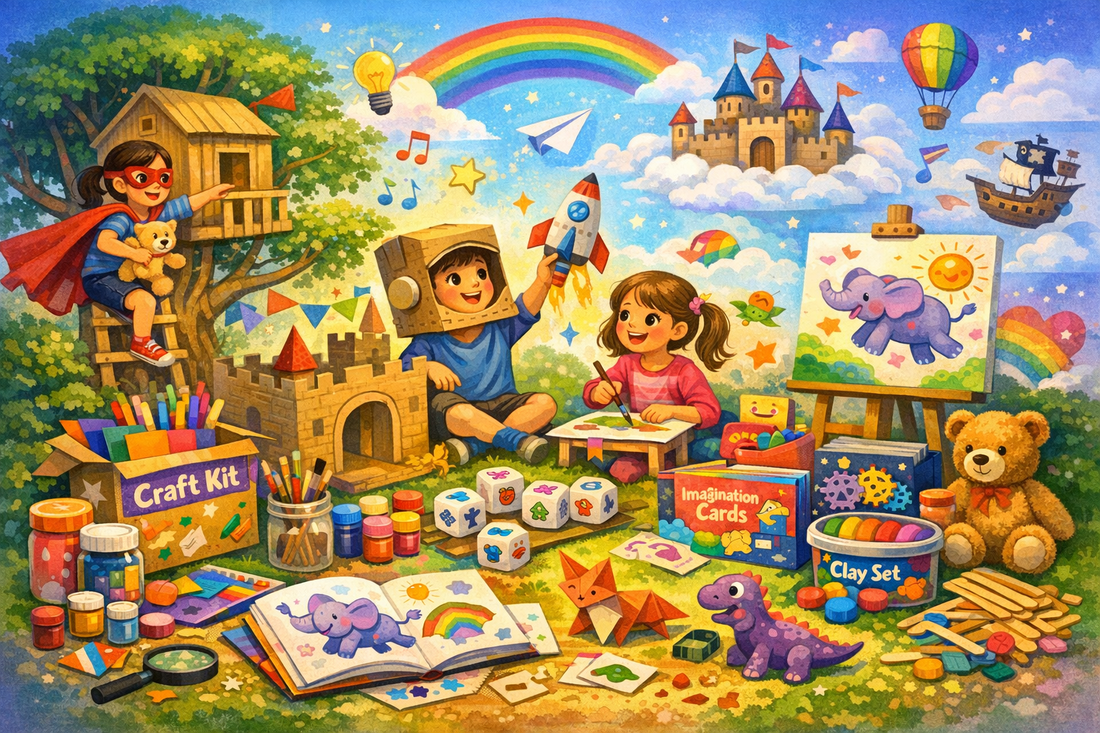
Close your eyes and think about childhood.
It’s not worksheets or screens we remember most.
It’s building imaginary houses, creating stories, drawing colorful worlds, pretending to be superheroes, teachers, chefs, or explorers.
Imagination is not “extra.”
It is one of the most powerful tools a child has.
And when we nurture creativity through thoughtful activities, we help children grow in ways that go far beyond academics.
Imagination Builds Strong Thinkers
When children imagine, they are not just playing — they are thinking deeply.
A simple activity like creating a paper animal, designing a small craft house, or making up a story encourages children to:
-
Think independently
-
Solve small problems
-
Make decisions
-
Experiment with ideas
-
See possibilities beyond what is in front of them
Creative activities train the brain to explore multiple solutions instead of looking for just one “correct” answer. This kind of flexible thinking becomes extremely valuable as children grow.
Creativity Builds Confidence
There is no “wrong way” in imagination-based activities.
A purple sun.
A flying elephant.
A house with rainbow windows.
When children are free to create without fear of mistakes, they develop confidence in their ideas. They learn that their thoughts matter. They feel safe expressing themselves.
This emotional safety builds self-esteem.
And confident children are more likely to speak up, try new things, and believe in their abilities.
Encouraging Emotional Expression
Children do not always have the words to explain how they feel.
But they can draw it.
They can build it.
They can act it out.
Creative activities give children a healthy outlet for emotions. Through art, pretend play, storytelling, and hands-on crafting, children process their feelings in a natural way.
Imagination becomes a bridge between their inner world and the outer world.
Reducing Over-Dependence on Screens
In today’s world, screens often replace creative play. While digital content can entertain, it does not always encourage children to think actively.
Imagination-based activities bring back active engagement.
Instead of watching someone else’s story, children create their own.
Instead of scrolling, they build.
Instead of consuming, they imagine.
And that shift makes a powerful difference.
Strengthening Focus and Patience
Creative projects require time. Whether it’s completing a craft, building something step-by-step, or finishing a coloring task, children learn to stay engaged for longer periods.
They practice patience.
They practice attention to detail.
They experience the joy of finishing what they start.
These are skills that support academic success later on — but they begin with simple creative play.
Creating Meaningful Family Moments
Imagination-based activities also create beautiful bonding opportunities.
Sitting together to create something, listening to your child’s made-up stories, or helping them bring an idea to life strengthens connection.
These shared moments become childhood memories.
And for parents, there is nothing more special than watching creativity unfold in front of your eyes.
More Than Just Activities
Imagination and creativity-based activities are not just ways to pass time.
They nurture problem-solvers.
They build confident communicators.
They support emotional growth.
They encourage independent thinking.
Most importantly, they allow children to be children — curious, expressive, and full of wonder.
Because when we give children the space to imagine, we give them the freedom to grow.
And sometimes, the biggest ideas begin with the smallest creative moments. 🌈✨